)
You’ve finished working through a complex case and decided the patient needs specialist input.
The history is documented, the diagnostics are back, and you know why you’re referring, but the blank referral letter creates a different problem.
How much of the case history belongs in the letter? Which findings need to come first, and which can stay in the supporting record? Include too much and the referral question can get buried; include too little and the specialist may not have enough context to assess the case.
This guide covers what to include in a veterinary referral letter, how to prioritize information based on the case, and what a complete referral letter looks like.
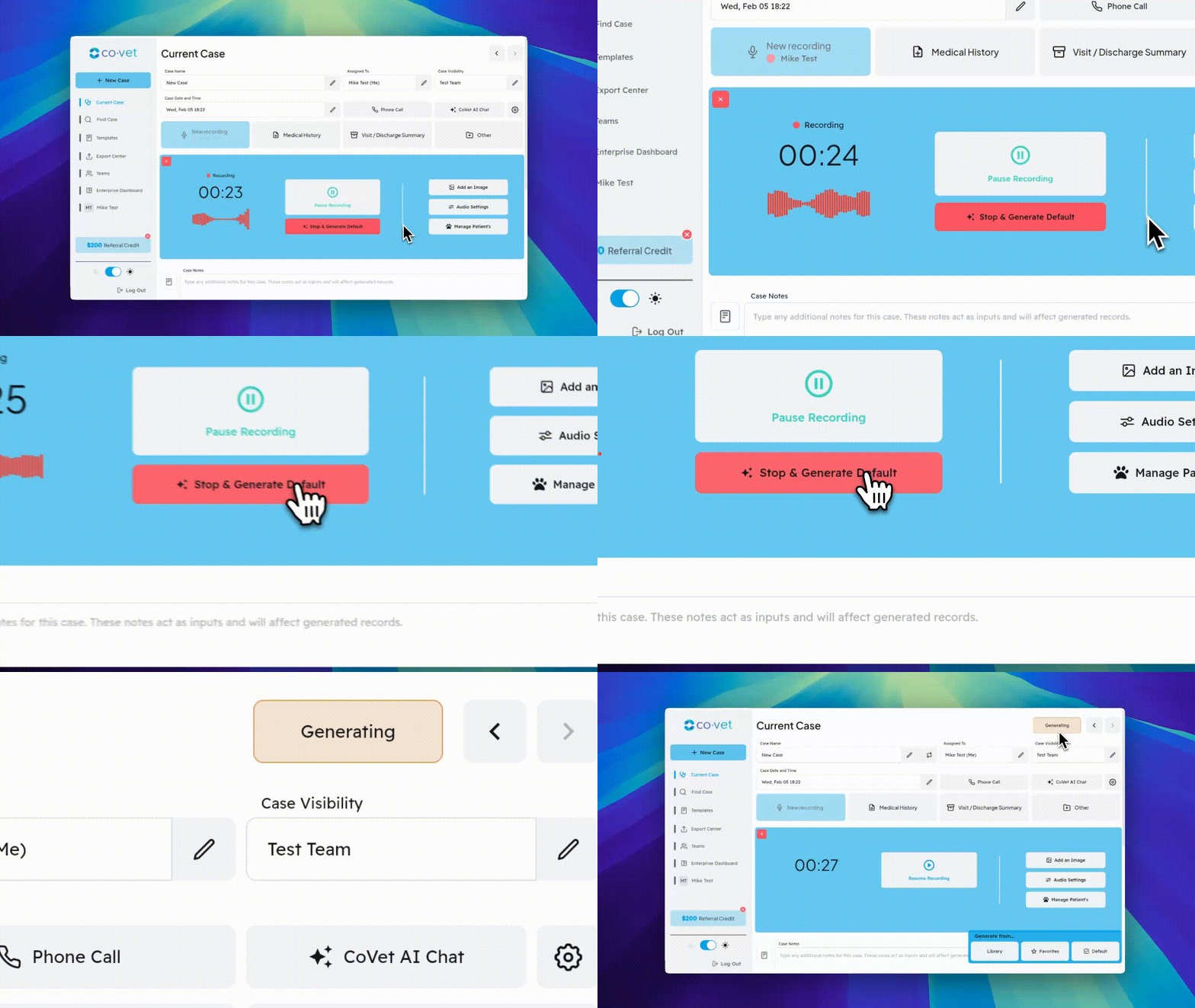
CoVet has a growing database of veterinary templates. Check out other templates that might be helpful for you:
What is a veterinary referral letter template, and when do you need one?
When a case moves from general practice to specialty care, the specialist needs a clear account of what has happened and why their input is needed.
A veterinary referral letter template provides the referring veterinarian with a reusable structure for communicating that information, including the patient’s history, clinical findings, current status, and reason for referral.
Because a veterinary referral involves transferring clinical, client, and appointment information, the referral letter may be confused with the referral form. Although the two work together, they serve different purposes.
The letter acts as a letter of introduction from the veterinarian and explains the clinical case, while the form collects the administrative or logistical information required by the receiving practice.
Like other veterinary templates, it offers a consistent starting point while allowing you to adjust the order and level of detail to the case. You can also adapt it to the veterinary client communication practices your clinic follows during referral.
What to include in a veterinary referral letter
Referral quality affects both continuity of care and the client experience.
The recent AAHA Referral Guidelines cite a Collaborative Care Coalition study in which 70% of clients across all income brackets agreed that referral resulted in a good outcome, while client perceptions of the referring veterinarian were six times more likely to improve after early referral.
The findings show the value clients place on timely referral and continuity between primary and specialty care.
A clear referral letter supports that continuity by giving the specialist the information needed to assess the case and understand what is being requested.
The table below outlines the information the AAHA recommends exchanging before referral and why each detail matters to the specialist reviewing the case.
Components | What to include | Questions it answers for the specialist |
Patient signalment | Species, breed, age, sex, and reproductive status | Who is the patient? |
Pertinent medical history | Relevant veterinary patient history, including prior conditions, procedures, allergies, and treatment response | What history affects the current presentation? |
Current medications | Current medications listing with drug, dose, route, frequency, and recent changes | What medication is the patient receiving now? |
Clinical findings | Progression of signs, current status, and relevant findings from the physical exam template | What has the primary care team observed? |
Diagnostics performed | Relevant laboratory results, imaging, pathology, test dates and findings | What has already been investigated? |
Reason and urgency | Reason for referral, timing, urgency, and clinical concern or working diagnosis | Why is the patient being referred and how soon? |
Requested specialist input | Referral question, scope of services outlined and preferred communication frequency | What does the primary care team need from the specialist? |
These components remain consistent across referrals, but their order and level of detail should reflect the case and the requirements of the receiving veterinary specialty referral practice.
Structuring by presentation type
To see how referral letters adapt in practice, compare the information prioritized in an oncology referral with a dermatology referral.
Presentation type | What leads the letter | What moves to an attachment |
Oncology referral | Pathology findings, staging information, treatment history and the specific reason for specialist input | Full pathology reports, laboratory reports and diagnostic images |
Dermatology referral | Duration and progression of clinical signs, lesion distribution, previous therapies, and response to treatment | Supporting diagnostic results, clinical photographs and relevant laboratory reports |
What leads a dermatology referral may not warrant the same prominence in an oncology referral.
Applying the same structure to both can make the specialist search through less relevant detail to find the information needed to understand the case.
Common mistakes in veterinary referral letters
Three mistakes commonly make veterinary referral letters harder for specialists to use:
1) Including history and diagnostics without prioritizing them.
A referral letter should not read like a chronological account of the veterinary medical record.
A 2025 systematic review of general practitioners identified “unnecessary information in the referral letter” as a communication barrier.
Lead with the information that explains the current presentation, then include pertinent history, findings, diagnostics, and treatment response based on their relevance to the referral.
Supporting detail can remain available in the medical record rather than competing with the information the specialist needs first.
2) Leaving the reason for referral unclear.
The specialist should not have to infer the request from the history or diagnostic findings.
State the referral question, scope, and urgency directly.
If the receiving practice requires coordination before the appointment, include the appropriate referral coordinator contact information so questions about the referral can be resolved without delaying the clinical handoff.
3) Sending diagnostics without connecting them to the clinical summary.
Laboratory results, imaging, and reports are more useful when the letter identifies why they matter to the case.
Connect the relevant diagnostic findings from the veterinary report template to the reason for referral, then provide the complete files separately through the practice’s supporting documentation submission process.
Veterinary referral letter checklist
Use this checklist as a final review before sending the referral.
It brings the key information above into one place so you can confirm that the clinical summary is focused, the referral request is clear, and the supporting documentation is complete.
Area | Include |
Clinical summary |
|
Referral request |
|
Supporting documentation |
|
How CoVet supports referral documentation
Preparing a referral is easier when the relevant case information is already captured in the medical record.
Documented history, examination findings, diagnostics, treatment decisions, and recommendations give you a clinical source to work from instead of reconstructing the case when it’s time to refer.
CoVet's AI veterinary scribe turns dictation during or after a case into a structured medical record in approximately 30 seconds.
When you need to prepare a referral, you can use information from the existing case or uploaded records to generate documents from CoVet's library of 95+ templates, including templates suited to referral communication.
CoVet also offers customizable templates, allowing your practice to define the sections and instructions needed for its referral workflow.
This can help keep referral documentation consistent while still allowing the content to reflect the individual case and specialist request.
Before sending a generated referral, review it for clinical accuracy, relevance, and the appropriate level of detail.
Frequently asked questions about veterinary referral letter templates
What is a veterinary referral letter?
A veterinary referral letter is a clinical summary sent by the referring veterinarian to the specialist receiving the patient. It explains the reason for referral and provides the relevant history, findings, diagnostics, treatment, and current status.
Are veterinary referral letters legally required before seeing a specialist?
Whether a referral letter is required depends on local regulations and the receiving practice’s policies. Some specialists accept patients directly, while others require referral documentation as part of the veterinary clinic referral process.
Check the practice’s requirements, scope of services outlined, and referral coordinator contact information before sending the patient.
Who is responsible for writing a veterinary referral letter?
The referring veterinarian is generally responsible for ensuring the specialist receives an accurate clinical summary and relevant records. Other team members may help complete a referring veterinarian information form, gather attachments, or coordinate transfer of records.
A collaborative team approach care model can support the process, but the clinical information should accurately represent the veterinarian’s assessment and reason for referral.
What happens if a veterinary referral letter is missing key information?
If information is missing, the specialist or referral coordinator may need to contact the referring practice for clarification. This can delay case review or scheduling and make it harder for the specialist to assess urgency, understand what has already been investigated, or prepare appropriately for the patient’s first visit.
What diagnostic files should I attach to a veterinary referral?
Attach diagnostic imaging, laboratory results, and other medical records relevant to the veterinary referral.
Depending on the case, supporting documentation submission may include radiographs, ultrasonography, computed tomography or magnetic resonance imaging, pathology reports and other test results.
Include files that help the specialist evaluate the referral rather than sending unrelated records.
About the Author
)

